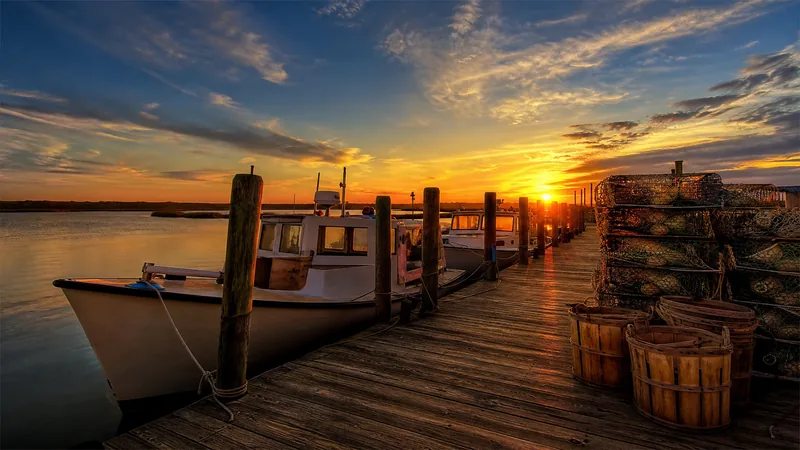
How to Start a Seafood Market or Crab House in Maryland
How to Start a Seafood Market or Crab House in Maryland
Starting a seafood market or crab house in Maryland requires careful attention to state and local licensing, food handling regulations, and sourcing requirements. Maryland's location on the Chesapeake Bay makes it an ideal place for seafood retail, but the regulatory framework is specific and non-negotiable. This guide walks you through the exact steps, costs, and compliance requirements to legally operate a seafood business in Maryland.
What You'll Need Before You Start
Materials and Infrastructure
- Retail space: A physical location with adequate square footage for customer access, product display, and storage. Exact size depends on your business model (small market stall to full crab house).
- Commercial refrigeration: Properly functioning walk-in coolers and display cases that maintain temperatures at or below 41°F for fresh seafood. These are mandatory under health code.
- Display and handling equipment: Ice bins, scales, cutting boards (food-grade), filleting knives, and wrapping materials if you process seafood on-site.
- Holding tanks or ice: For live crabs or to maintain product temperature during sale.
- Signage and labeling: Clear product labels with species name, origin, and date caught or received. Required by Maryland law.
- Handwashing and sanitation stations: Mandatory for any retail food operation.
- Business formation documents: Articles of Organization (if LLC) or Articles of Incorporation (if corporation), plus a Registered Agent with a Maryland street address.
Key Regulatory Permits and Licenses
Three state agencies and your county health department must approve your operation before you can sell seafood in Maryland:
- Maryland Department of Natural Resources (DNR): Issues the Seafood Dealer License.
- Maryland Department of Health (MDH): Oversees food handling and processing.
- County health department: Issues the retail food license for your physical location.
- Maryland Comptroller: Oversees sales tax and registration.
Step-by-Step: How to Start a Seafood Market or Crab House in Maryland
Step 1: Choose Your Business Structure
Decide whether to operate as a sole proprietorship, partnership, limited liability company (LLC), or corporation. For a seafood business with inventory, equipment, and liability exposure, an LLC or corporation is recommended for liability protection. You will not pay a separate franchise tax to Maryland on an LLC (it is a pass-through entity), but you will owe personal income tax at rates between 2% to 6.5% state plus county tax of 2.25% to 3.30%. Corporations pay a flat 8.25% corporate income tax on Maryland taxable income.
Register your business with the Maryland State Department of Assessments and Taxation (SDAT). If you are incorporating, file Articles of Incorporation; if you are forming an LLC, file Articles of Organization. Both must include a Maryland Resident Agent (any Maryland citizen over 18, a Maryland corporation, or Maryland LLC) who has a Maryland street address and can accept legal papers on your behalf. This agent must sign your formation document and give consent before you file.
You can file online through Maryland Business Express at https://egov.maryland.gov/businessexpress. The filing fee is $100 for an LLC or $120 for a corporation. Standard processing takes about two months; expedited options cost $50 to $425 and are reviewed within 7 to 14 business days to 3 hours, depending on the service level you choose.
Step 2: Obtain Your DNR Seafood Dealer License
The Maryland Department of Natural Resources (DNR) Seafood Dealer License is your primary state-level permit for selling seafood in Maryland. The $50 figure in DNR's licensing scenarios sheet applies to a commercial harvester selling directly to customers, and the fuller dealer license fee schedule for a retail market is not confirmed here. Ask DNR which dealer license your operation needs and what it costs.
Before you apply for the DNR license, confirm with DNR the complete dealer license fee schedule for your specific operation (retail market, wholesale, crab picker, etc.). Different scenarios may have different fees or additional surcharges. For example, DNR's licensing scenarios sheet (11/22/2023) lists a $50 Seafood Dealer License plus a $50 Seafood Marketing Surcharge for a commercial harvester who sells whole fish directly to customers without a dealer license. Verify these details directly with the Maryland DNR before applying.
Contact DNR to request the Seafood Dealer License application and ask what documents it requires.
Step 3: Obtain Your County Retail Food License
Every Maryland county requires a separate retail food license for any business that stores or displays food for sale. You must apply through your county health department (not SDAT). The license covers general food safety for your retail location. Fees and plan-review rules vary by county, so confirm them with your county health department.
Before the health department issues a license, they will conduct an inspection of your facility. You must have:
- Proper refrigeration (41°F or below for fresh seafood).
- Hand-washing stations accessible to staff.
- Clean, food-grade surfaces and equipment.
- Proper drainage and waste disposal.
- Clear product labeling and origin documentation.
The health inspector will verify compliance with the applicable Maryland food safety regulations. Pass inspection before the license is issued. If deficiencies are found, you must fix them and request a follow-up inspection.
Step 4: License Special Seafood Operations (Filleting, Canning, Processing)
If you plan to fillet, package, or label fish for retail sale at your market, your county retail food license covers this operation. However, if you produce whole crabs that are picked, canned, or packed, these activities fall under Maryland Department of Health food processing rules. Contact the MDH Center for Food Processing to understand whether your crab or seafood processing operation requires a separate processing license. Many crab picking and canning operations need MDH approval and follow specific sanitation and handling protocols.
If you plan to sell wholesale filets or packaged seafood to restaurants, stores, or other distributors, you will need an MDH Center for Food Processing license in addition to your retail food license. This is more stringent than retail and requires a licensed food processing facility.
Step 5: Obtain a County Trader's License
Businesses that sell goods (including seafood) generally need a trader's license, issued by the Clerk of the Circuit Court in the county. Apply through the Clerk of the Circuit Court in your county. The license year runs May 1 through April 30. You cannot receive a trader's license if you owe personal property tax or have missing SDAT filings, so verify your tax status before applying.
First, you must obtain a free Sales and Use Tax License from the Maryland Comptroller through the Combined Registration Application. Once you have that, present it to the Clerk along with your trader's license application. The Clerk will issue your license. Growers and manufacturers are exempt from the trader's license. A retail seafood market that sells goods generally needs one. A crab house that operates as a restaurant may be exempt if nonfood sales are 10% or less of its sales (since 10/1/2024) but may need a restaurant license from the Clerk, so confirm with your county Clerk which license applies.
Step 6: Register for Maryland Sales Tax and Obtain Credentials
If you sell seafood to end consumers, you must collect and remit Maryland sales tax. The state sales tax rate is a single statewide 6%. Maryland has no local sales taxes. Contact the Maryland Comptroller at https://www.marylandcomptroller.gov/ or apply through the Combined Registration Application online at https://businessexpress.maryland.gov/start/taxes-and-insurance.
You will receive a Sales and Use Tax License and a Comptroller account. Use this to file monthly or quarterly sales tax returns and remit collected tax to the state. Non-compliance results in penalties and interest, so file consistently.
Step 7: Establish Your Seafood Supply Chain
Source your seafood from licensed suppliers or licensed harvesters who can provide documentation of origin, harvest date, and species. Maryland requires clear labeling and traceability. Keep records of all seafood received, including the supplier's license number, product species, date received, and date sold.
If you intend to buy crab directly from watermen or harvesters, ensure they hold a valid Seafood Dealer License. If you buy processed or packaged seafood from wholesalers, verify they hold MDH food processing approval.
Step 8: Complete Staff Training and Post Licenses
All staff who handle seafood or work in food preparation must receive food safety training. Ask your county health department which food safety training and certifications are required for your staff and your location.
Display all licenses visibly at your retail location: the DNR Seafood Dealer License, county retail food license, trader's license, and Comptroller sales tax license. Inspectors verify these are current and posted.
Timeline and Costs
| Item | Cost | Timeline |
|---|---|---|
| SDAT LLC/Corporation Filing | $100 to $120 (plus $50 to $425 expedited) | 2 months standard; 7 to 14 business days to 3 hours expedited |
| DNR Seafood Dealer License | Confirm with DNR (a $50 dealer license plus $50 surcharge applies in one scenario) | Confirm with DNR |
| County Retail Food License | Varies by county; confirm with your county health department | Varies by county |
| County Trader's License | Tiered by stock value ($15 to $800 in counties, $20 to $2,125 in Baltimore City, $20 to $1,600 in Baltimore County), plus a $2 issuing fee | Varies by county Clerk |
| Maryland Sales Tax Registration | Free | Confirm with the Comptroller |
| Staff food safety training (if required) | Varies by course | Varies |
| Total Minimum Regulatory Costs | Varies by county and operation (plus equipment) | Several weeks, depending on inspections |
Tips to Avoid Common Mistakes
- Do not start operations without all licenses. Operating without proper state and county licenses is illegal and can result in fines, closure, and civil liability.
- Verify all fees with the agencies directly. The DNR dealer license fee schedule may vary based on your specific operation. Call before assuming a flat $50 fee.
- Keep detailed records of all seafood received and sold. Health inspectors and DNR auditors may request supply chain documentation. Missing records are a common violation.
- Maintain proper refrigeration at all times. A broken cooler that brings product above 41°F can result in product seizure and health violations.
- Label every product clearly with species, origin, and date. Mislabeling or selling seafood without required documentation is illegal in Maryland.
- Never attempt to can or process crabs without understanding MDH requirements. Crab canning has strict pH and pressure requirements. Improper processing can cause foodborne illness and serious liability.
- Do not confuse retail and wholesale licensing. If you sell any product to restaurants, distributors, or other businesses, you may need an MDH food processing license in addition to your retail license.
- File your sales tax returns on time. Maryland imposes penalties for late filing. Set a calendar reminder for your tax deadline.
What to Expect After You Open
Once licensed and operating, you will face regular health inspections, possible sales tax audits from the Comptroller, and periodic DNR compliance checks on seafood sourcing and labeling. Inspectors look for proper temperature control, clean facilities, accurate product labeling, and documented supply chain traceability. Compliance with these requirements protects both your customers and your business from liability.
Your first year will establish whether your location, product mix, and pricing model attract sufficient customers to sustain the business. Maryland's seafood market is competitive, especially near the Chesapeake Bay waterfront. Success depends on consistent product quality, fair pricing, customer service, and strict regulatory compliance.
Disclaimer
This article is informational only and is not legal or tax advice. Seafood licensing, food handling regulations, and tax requirements are complex and vary by county and operation type. Before starting a seafood market or crab house in Maryland, consult with a Maryland-licensed attorney and a certified public accountant (CPA) familiar with food service businesses. They can review your specific business model, advise on the optimal entity structure, and ensure full compliance with all state and local regulations.
For additional assistance, contact the Maryland Small Business Development Center (SBDC) Network at https://www.marylandsbdc.org/. They provide free or low-cost consulting to help small business owners navigate licensing and regulatory compliance.
Keep exploring: related Maryland guides
- How to Open a Restaurant in Maryland
- How to Start a Vending Machine Business in Maryland
- How to Start a Food Truck in Baltimore City
- How to Get a Liquor License in Baltimore City
- Maryland Liquor License
- How to Start an LLC in Maryland
- Maryland Business License
- How Much Does It Cost to Start a Business in Maryland
- All Maryland business types
- Every Maryland guide in one place