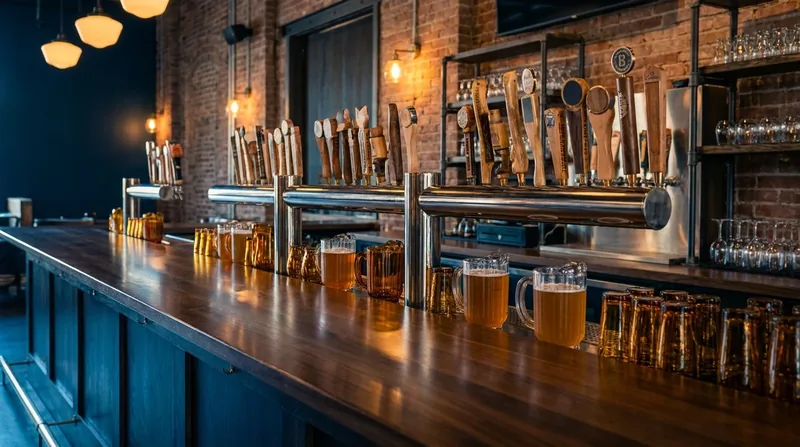
How to Start a Brewery, Winery or Distillery in Maryland: Class 4, 5, 7, 8 and 10 Licenses
How to Start a Brewery, Winery or Distillery in Maryland: Class 4, 5, 7, 8 and 10 Licenses
Starting an alcohol manufacturing business in Maryland requires navigating a two-tier licensing system: federal approval through the Alcohol and Tobacco Tax and Trade Bureau (TTB) and state approval through the Maryland Alcohol, Tobacco, and Cannabis Commission (ATCC). This guide walks you through the license classes, the regulatory approval process, and the business formation steps specific to breweries, wineries, and distilleries in Maryland.
Understanding Maryland Beverage Manufacturer License Classes
Maryland offers multiple manufacturer license classes, each with different requirements, annual fees, and production or operational restrictions. The license class you apply for depends on what you plan to produce, whether you will farm-grow ingredients, and whether you need to sell directly to consumers on your premises.
Maryland Winery Licenses: Class 3 and Class 4
Class 3 Winery License: A standard winery license allows you to produce wine from any source of grapes or other fruit. The annual license fee cap is $750, set by the ATCC Executive Director within statutory limits. This is the more flexible winery license if you do not plan to focus exclusively on Maryland-grown ingredients.
Class 4 Limited Winery License: A limited winery emphasizes local production and qualifies for a lower annual fee (cap of $200) if you meet specific requirements. To hold a Class 4 license, you must either own or lease at least 20 acres of Maryland-grown crops, or source at least 51% of your wine ingredients from Maryland growers. You may blend purchased bulk wine into your production, but purchased wine cannot exceed 75% of your annual production total. This license is designed to support Maryland vineyards and agritourism operations.
Maryland Brewery Licenses: Class 5, 6, 7, and 8
Class 5 Brewery License: A standard brewery license is the general brewery license. The annual fee cap is $1,500, with the actual fee set by the ATCC Executive Director. Confirm the current conditions with the ATCC.
Class 6 Pub-Brewery License: If you plan to operate a restaurant with full bar service and sell your beer to consumers on the premises, a Class 6 pub-brewery license (annual fee cap $500) requires you to hold a Class B on-sale restaurant license and maintain an adjacent restaurant. Your annual production may not exceed 2,000 barrels. This license combines hospitality with production and is ideal for brewery restaurants.
Class 7 Micro-Brewery License: A micro-brewery license (annual fee cap $500) is for smaller-scale beer production and requires you to hold a Class B restaurant license. This option works well for brewpubs or small breweries that want to leverage an existing food service license and keep production smaller.
Class 8 Farm Brewery License: A farm brewery license is designed for Maryland farm-based producers. Confirm the current ingredient and acreage requirements with the ATCC. The annual fee cap is $200, the lowest among brewery licenses. Effective July 1, 2026, farm brewery licenses must now engage in agritourism activity on the premises (such as tours, tastings, or events). This license supports Maryland agriculture and rural economies.
Maryland Distillery Licenses: Class 1, 9, and 10
Class 1 Distillery License: A standard distillery license for producing spirits, with an annual fee cap of $2,000, set by the ATCC Executive Director.
Class 9 Limited Distillery License: A limited distillery allows smaller-scale spirits production and requires you to hold a Class B or Class D on-and-off sale license. The annual fee cap varies; confirm current rates with the ATCC.
Class 10 Farm Distillery License: Introduced by SB 807 (Chapter 861, effective July 1, 2026), the Class 10 farm distillery license is available only to holders of an existing Class 8 farm brewery license. This license allows a farm brewery to expand into spirits production. The annual fee cap is $500. This is a unique path for agricultural producers who want to diversify into spirits.
Step-by-Step Process: From Business Formation to Federal and State Approval
Step 1: Form Your Business Entity in Maryland
Before you apply for any manufacturer license, you must establish a legal business entity recognized by Maryland. Most breweries, wineries, and distilleries operate as Limited Liability Companies (LLCs) or Corporations.
File Articles of Organization or Incorporation: Submit your Articles of Organization (for an LLC) or Articles of Incorporation (for a corporation) with the Maryland State Department of Assessments and Taxation (SDAT), Charter Division. The filing fee for an LLC is $100. Processing times are typically the second calendar month after submission for standard filings, though expedited and online rush options are available. File online through Maryland Business Express at https://egov.maryland.gov/businessexpress.
Appoint a Resident Agent: Maryland requires that your business have a resident agent (Maryland's term for a registered agent). The agent must be a Maryland resident over age 18, a Maryland corporation, or a Maryland LLC, and must have a Maryland street address on file (not a P.O. box). The resident agent must sign your Articles of Organization, and you must have their consent before filing.
Choose Your Manufacturer License Class: Decide which license class fits your production model, ingredients sourcing, and sales plans (see license descriptions above). This decision affects your annual fees, production flexibility, and agritourism requirements.
Step 2: Reserve Your Business Name (Optional)
Before filing your formal business documents, you can reserve your preferred business name with the SDAT for 30 days. Name reservation costs $25 and protects your name while you complete other startup steps. Apply at https://dat.maryland.gov/sdat%20forms/name_reservation.pdf.
Step 3: Obtain Federal TTB Approval
Before you can receive your Maryland state manufacturer license, you must first secure federal approval from the U.S. Alcohol and Tobacco Tax and Trade Bureau (TTB). The TTB regulates the production, labeling, and tax payment for beer, wine, and spirits nationwide.
What You Need: The TTB application requires details about your facility location, production equipment, production formulas (especially for spirits and wine), your business structure, and ownership information. Different application forms exist for beer, wine, and spirits manufacturers.
TTB Application Process: Processing times vary by permit type and application volume, so check the TTB website for current timelines. Once approved, you receive your federal permit or registration, which is your proof of federal authorization.
Key Point: Your Maryland state license cannot be issued until the TTB approves your operation first. Plan for the federal review period before you even submit your state application.
Step 4: Apply for Your Maryland Manufacturer License
Once you have your TTB approval, apply for your Maryland manufacturer license through the ATCC. The application includes your TTB permit number, your facility address, your business formation documents, proof of ownership or lease of the production location, and identification of all owners and operators.
Where to Apply: Submit your application to the Maryland Alcohol, Tobacco, and Cannabis Commission (ATCC). The mailing address and online application portal are available at the ATCC website. Ask the ATCC for current processing times, and expect it may request additional information.
Annual License Fees: The ATCC Executive Director sets annual fees within statutory caps based on license class. Confirm the license year, payment timing and renewal process with the ATCC.
Step 5: Secure Facility and Equipment
Your manufacturer license application must include the facility address where you will produce your beverages. The facility location is tied to your license and cannot be moved without amending your approval. Before you apply, ensure that you own or have a long-term lease on a space suitable for production and storage.
Production Equipment: Your facility must include appropriate equipment for your beverage type. Breweries require fermentation tanks, bottling equipment, and quality control laboratories. Wineries need crushing and pressing equipment, fermentation vessels, and barrel storage. Distilleries require copper stills, condensers, storage tanks, and aging infrastructure. Confirm with the TTB and the ATCC what they require for your facility and equipment.
Location Zoning and Local Approvals: Check with your local city or county planning office to ensure that a brewery, winery, or distillery is permitted in your chosen location. Some municipalities restrict alcohol manufacturing to industrial zones or require special permits or conditional use licenses. Obtain any local approvals before or alongside your state and federal applications.
Step 6: Comply with Agritourism Requirements (Class 8)
As of July 1, 2026, the Class 8 farm brewery license requires agritourism activity (SB 807, Chapter 861). Confirm with the ATCC exactly which activities count, how they must be documented, and whether the requirement also applies to the Class 10 farm distillery license, which is available only to Class 8 holders.
Important: Maryland Direct Shipping and Sales
Maryland updated its direct-to-consumer shipping laws in 2024. If you plan to ship your beverages directly to customers, confirm the current terms and any reciprocal agreement requirements with the ATCC before finalizing your sales strategy. Direct shipping rules change frequently and vary by state, so early confirmation with the ATCC protects you from compliance violations.
Common Mistakes to Avoid
Mistake 1: Skipping TTB approval. Many founders assume they can apply directly to Maryland. You cannot. The TTB must issue a permit first. Budget 6 to 12 weeks for federal review and do not commit to a launch date until you have your TTB approval in hand.
Mistake 2: Choosing the wrong license class. If you later decide to add agritourism (Class 8) or expand into spirits (Class 10), you may need a different or additional license, and Class 10 is open only to Class 8 holders. If you do not have the required 20 acres or 51% Maryland-grown sourcing, the Class 4 limited winery license is not available to you. Choose correctly at the start.
Mistake 3: Ignoring local zoning. A beautiful rural property for your farm brewery is worthless if your county zoning code prohibits alcohol manufacturing. Always confirm local approval before signing a lease or purchase agreement.
Mistake 4: Underestimating startup timelines. From business formation through TTB approval to your first license issuance can take months. Plan accordingly and do not commit to opening dates to customers until all approvals are finalized.
Mistake 5: Inconsistent ingredient sourcing. If you hold a Class 4 limited winery license, you must meet its Maryland-grown sourcing requirement. Confirm with the ATCC how compliance is tracked and what happens if you fall short.
Recommended Next Steps
Once you have your Maryland manufacturer license in place, you will typically need to:
- Obtain a Maryland sales and use tax license from the Comptroller of Maryland (required before you sell your product).
- Secure any required county or city business permits or trader's licenses (varies by location).
- Register with the Maryland Department of Labor for employment tax purposes if you plan to hire staff.
- Set up federal excise tax accounts with the TTB and understand your monthly and annual tax reporting obligations.
- Comply with TTB label approval requirements (all labels must be pre-approved by the TTB before you use them).
- For wineries and breweries with on-site consumption, ask your local liquor board about the appropriate on-sale or restaurant license (alcohol retail licenses are issued by Maryland's 25 local boards, not the ATCC).
Important Disclaimer
This content is informational only and does not constitute legal or tax advice. Maryland alcohol manufacturing law is complex, and the regulations are subject to change. The TTB and ATCC rules are detailed and specific to your production method, facility, and ownership structure. Before you start your business, consult a qualified attorney licensed in Maryland who specializes in alcohol beverage law, and consult a certified public accountant (CPA) or tax professional familiar with federal alcohol excise taxes and Maryland state and local tax obligations. A misstep in compliance can result in license denial, fines, or closure of your operation.
Official Maryland Resources
- Maryland Business Express (for business formation filings): https://egov.maryland.gov/businessexpress
- Maryland SDAT (business licensing information): https://dat.maryland.gov/businesses/Pages/default.aspx
- Maryland Alcohol, Tobacco, and Cannabis Commission (ATCC): Contact the ATCC directly for manufacturer license applications, annual fees, and regulatory guidance on agritourism requirements and direct shipping.
- U.S. Alcohol and Tobacco Tax and Trade Bureau (TTB): https://www.ttb.gov for federal permit applications and production formulas.
Keep exploring: related Maryland guides
- How to Open a Bar or Tavern in Maryland
- How to Start a Catering Business in Maryland
- How to Start a Bakery Business in Maryland
- How to Start a Coffee Shop Business in Maryland
- Maryland Liquor License
- How to Start an LLC in Maryland
- Maryland Business License
- How Much Does It Cost to Start a Business in Maryland
- All Maryland business types
- Every Maryland guide in one place